- Security
- Privacy
- Performance
It's every iPhone owner's worst nightmare — you try to power on your device only to see an ominous blank screen. While that’s frustrating, there are solutions. Learn why your iPhone won’t turn on and how to fix it. Then, install a dedicated cleanup app to help optimize your iPhone and keep it running smoothly.




This Article Contains
This Article Contains
Common reasons why an iPhone won't turn on
The most common reasons an iPhone won’t turn on are a drained battery, a temporary software issue, or physical damage. If your iPhone suddenly shut down while working normally, a failing battery, overheating, or a frozen system is more likely to be to blame. Fortunately, you can often fix battery and software problems at home without a repair visit.
Check out the diagnostic steps below to identify the cause and take the first step towards getting your iPhone working again.
 Battery drainage
A common and relatively innocuous reason why an iPhone won’t power on is that it simply lacks charge. As with any battery-powered device, an iPhone can’t operate without a certain amount of charge.
As your iPhone ages, poor battery performance becomes more common because batteries naturally degrade over time. This is why a new iPhone holds a charge for longer periods, but after several years, the battery life shortens significantly. Eventually, your iPhone may need a battery replacement to maintain its functionality.
 Physical damage
Another frequent cause of iPhones not turning on is physical damage. Damage can occur in many ways, although dropping your iPhone on a hard surface is most likely to affect your iPhone’s critical internal components.
iPhone water damage is another common issue. While models from the iPhone 12 onward have an IP68 water resistance rating — theoretically allowing them to survive up to six meters of water for 30 minutes — this protection isn't foolproof. Over time, the seals can weaken, and even minor water exposure can prevent your iPhone from turning on.
 Software glitch
On rare occasions, bugs in an iPhone’s software can cause it not to turn on, or to get stuck while loading, displaying the Apple logo but not progressing to the password screen. This sort of update glitch is most likely to occur after a new iOS install or app update.
 Overheating
When an iPhone overheats it may shut down automatically to prevent permanent damage to its internal components. In this case, it won’t turn back on until it has cooled down to a safer operating temperature.
iPhones can overheat for several reasons, such as too much exposure to direct sunlight or too many background processes running at the same time. Before shutting down, you may have noticed your iPhone getting slow or displaying other performance issues.
 Charging port blockage
A blocked charging port can prevent an iPhone from charging properly, making it seem as though the battery has died — even if the battery is perfectly healthy. Dust, lint, and other debris can build up inside the port over time, especially if you regularly carry your phone in a pocket or bag. Check the charging port for visible debris and carefully remove any buildup before trying to charge your iPhone again. Avoid inserting sharp or metallic objects, which could damage the port or its internal components.
 Jailbreaking issues
Jailbreaking an iPhone removes software restrictions and grants root access to the device. While this offers certain benefits, it exposes your device to increased security risks and can also cause startup problems if a jailbreak modifies or conflicts with system files, tweaks, or extensions required for iOS to boot. In some cases, an incompatible tweak or failed jailbreak can leave an iPhone stuck on the Apple logo, repeatedly restart, or fail to start normally.
 Jailbroken iPhones are more susceptible to security and performance issues.
What to do if your iPhone won't turn on?
If your iPhone won’t turn on, there are plenty of simple fixes to try such as charging your device, leaving it to cool down, or forcing a hard reset. As a last resort, you may need to perform a factory reset or pay for a repair.
To troubleshoot the reason why your iPhone's not turning on, work through the following six steps:
1. Charge your iPhone
The easiest solutions are easy to overlook. Plug your iPhone into a charger and leave it for 30-60 minutes. If it powers on automatically while charging, there's no need to worry — it just ran out of battery.
If your iPhone isn’t charging, the cable might be damaged. Try using a different charging cable and leave it for another 30 minutes. Still no luck? It could also be worth trying your charger in a different outlet.
2. Leave your phone to cool down
To ensure your iPhone is at a normal operating temperature, leave it unplugged on a flat, cool surface, such as on a table and out of direct sunlight. It’s also a good idea to remove the case if you have one. After 30 minutes, it should be ready to try turning on again.
No matter what, never put your iPhone in the fridge or a freezer as this can cause irreparable damage to the internal components.
3. Perform a hard reset
If your iPhone is hung up on a software glitch, then forcing a restart may fix the problem. A hard reset will stop all apps and background processes and relaunch the operating system.
To perform an iPhone hard reset, do the following in quick succession:
-
Quickly press and release the volume up button.
-
Press and then quickly release the volume down button.
-
Press and hold the side button until the Apple logo appears.
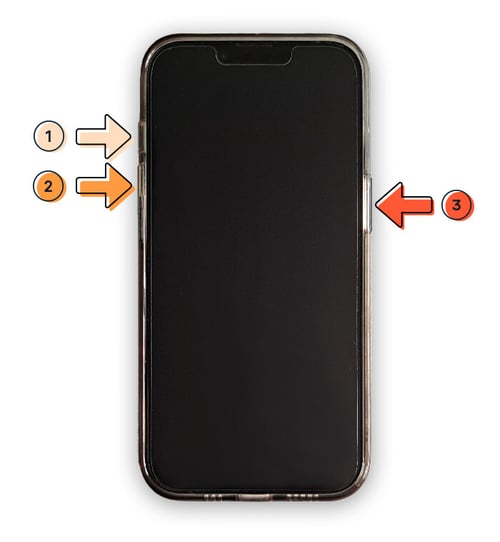
For iPhone 7 and 7 Plus, press and hold the side button and volume down button together until the Apple logo appears. Older models use a different button combination. See Apple’s official instructions for your specific iPhone model.
If the hard reset was successful, your iPhone should now restart normally.
4. Replace the phone’s battery
If your iPhone battery has degraded to the point that it no longer turns on, it will need to be replaced. Apple recommends having battery service performed by Apple or an authorized service provider rather than attempting it yourself.
Battery service costs vary by iPhone model and can change over time. Check Apple’s current iPhone repair and service pricing for the latest battery replacement cost. If you have AppleCare+, battery service may be covered when the battery’s capacity falls below Apple’s specified threshold.
5. Have your phone repaired
If your iPhone is physically damaged and won’t turn on, visit an Apple store to have it assessed by their experts. They’ll determine if it can be fixed, though repairs may come with a fee.
Costs vary based on your warranty status, whether you have AppleCare+, your iPhone model, and the extent of the damage. In some cases, severe damage may render the iPhone beyond repair.
6. Use recovery mode
If your iPhone is stuck in an endless boot-up loop, try connecting it to a computer and running it in recovery mode. You will need the latest version of iTunes or the Apple Devices app installed if you’re using a PC.
-
Plug your iPhone into a Mac and launch Finder or into a PC and launch Apple Devices or iTunes.
-
Press and release the volume up button, press and release the volume down button, then press and hold the power button until you see the Connect to computer screen.
-
When you see a pop-up message appear on your screen, choose Update.
For persistent problems, DFU (Device Firmware Update) mode is a deeper recovery option that can reinstall the device firmware. It’s more advanced than recovery mode and should generally be considered only after standard recovery steps fail.
If this does not resolve your problems, then repeat the steps above but tap Restore in step 3 instead. But beware that restoring your iPhone will wipe all user data and revert it to factory settings, so this should be a last resort.
Keep your iPhone running smoothly with Avast
If your iPhone is running critically low on storage, performance can suffer, and some functions may not work normally.
Avast Cleanup can help identify unnecessary files and reclaim storage, giving your device more room to operate. Freeing up space won’t fix every cause of an iPhone that won’t turn on, but it can help address storage-related performance problems once you regain access to the device.
What customers say

More Performance Articles
Facebook Session Expired: Causes, Solutions, and Prevention

How to Get Your Mouse Cursor Back: 11 Tried and Tested Methods

How to Split Screens on Your PC or Laptop (Windows 10 & 11)

Your Phone Is Not Registered On a Network: What It Means and How to Fix It

Why Won't My iPhone Turn On? 6 Easy Fixes to Try

Why Your iPhone Gets So Hot and How to Fix It

Why Is My Ping So High and How to Reduce It

Why Your Keyboard Isn’t Working and How to Fix It in 6 Easy Steps

How to Right-Click on Mac With or Without a Mouse

How to Test for Packet Loss and Check Your Internet Quality

How to Fix Common Printer Problems

Why Does My Phone Keep Restarting and How Can I Fix It?
Performance Tips
Performance
Oliver Buxton
16-09-2024